

THE SIGNIFICANCE AND USE OF CULTURE IN THE CONTEMPORARY AFRICAN SOCIETY: THE STUDY OF IGBO SYMBOLS AS A PARADIGM
- Open access
- Peer reviewed
- CC BY 4.0
Authors
- Gladys Ifeoma Udechukwu Corresponding author
Abstract
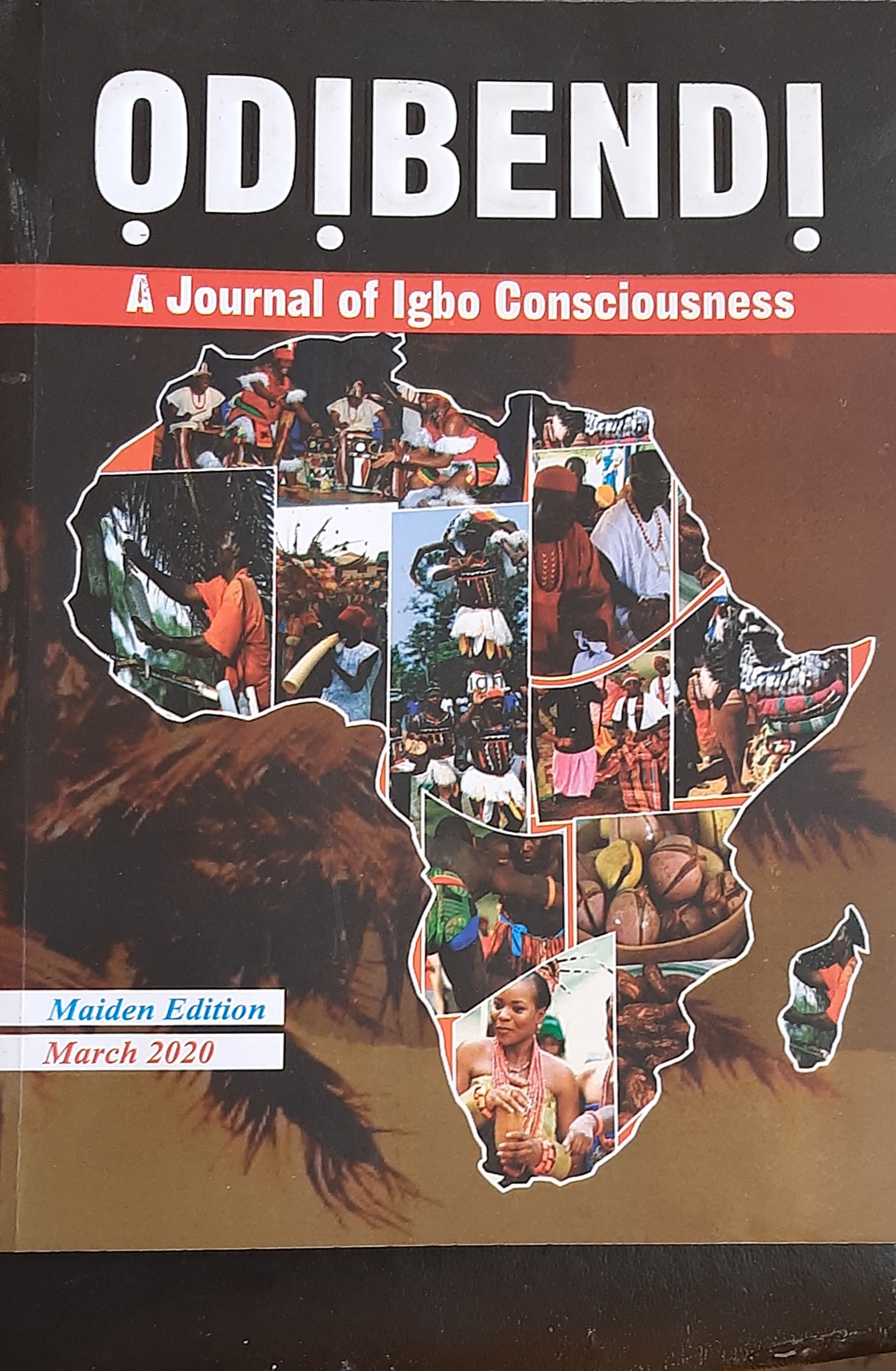
Africans in general and Igbo people in particular are blessed with some cultural artifactswhich help and direct them to live in accordance with their traditions. It has been observedthat because of civilisation and western education, they have abandoned some of thesecultural artifacts which helped them in their daily lives in the past. This has created manyproblems to them. One of the things which distinguish man from all other animals is hisability to symbolise memories, imaginations and religious experience. A symbol operatesbecause it bears a relationship with the symbolised things and these place limits upon its use.The Igbo as an ethnic group in Nigeria is widely known, not only because of its largenessbut also as an ethnic group that is endowed with rich cultural heritage. Igbo culture is full ofmany symbols which have much significance and effects to life. It is true that Nigeria hasmany other ethnic groups but the culture of Igbo people ranging from material to nonmaterial aspects give proper identity that distinguishes Igbo people from other ethnic groupsin Nigeria. This study therefore aims at giving clear identification and definition of Igboculture symbols and their significance and effects to Igbo cultural life. This will help thepresent Africans and Igbo people to understand the importance of these symbols and theiruses in their daily lives, which will also help to minimise the negligence of their culturalobservances.